Work Should Feel Good with Diana Alt
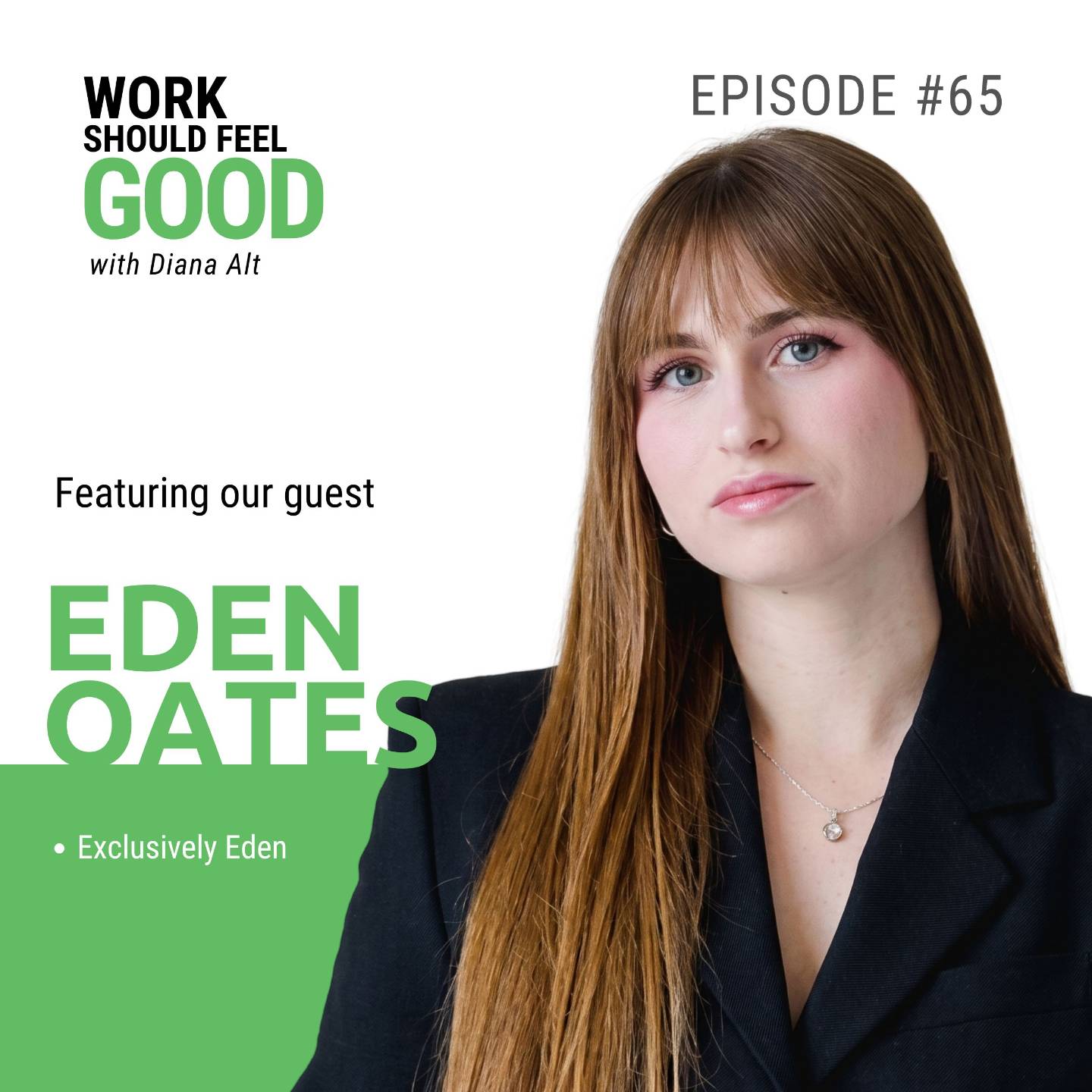
Episode 65: Building Visual Authority That Builds Trust with Eden Oates
Your expertise may be exceptional—but if your visual presence doesn't reflect it, you could be creating unnecessary friction before you ever introduce yourself.
In this episode of Work Should Feel Good, Diana Alt welcomes visual strategist and brand stylist Eden Oates for a conversation about first impressions, authenticity, confidence, and the psychology behind personal style. Together they unpack why visual authority isn't about fashion trends or looking expensive—it's about making sure your outside accurately communicates what you've already built on the inside.
Whether you're leading a team, growing a business, interviewing for your next role, or stepping onto a stage, this episode will help you think differently about how your presence influences trust, credibility, and opportunity.
You’ll learn:
- Why visual authority begins before you ever speak
- How authenticity and professionalism can work together instead of competing
- Practical ways to align your appearance with your expertise
- Why dressing for the outcome you want changes how others respond to you
- How to build confidence without buying an entirely new wardrobe



Episode 65: Building Visual Authority That Builds Trust with Eden Oates
Episode Description
What if your appearance is either reinforcing or quietly undermining the credibility you've already earned? In this episode, Diana sits down with image strategist Eden Oates to explore how visual authority builds trust, confidence, and connection without feeling fake or performative.
Whether you're a corporate leader, entrepreneur, or professional looking to strengthen your personal brand, you'll learn how to align your external presence with who you really are so that your first impression supports the value you bring.
-
Why visual authority is about psychology, not fashion
-
How clothing influences trust and credibility before you speak
-
The difference between authenticity and creating a persona
-
Choosing colors and style that reflect your brand—not someone else's
-
Why understanding your audience matters more than following style rules
-
Dressing for the result you want instead of simply getting dressed
-
Common mistakes professionals make that create unnecessary friction
-
Building confidence through congruence between your inside and outside
-
Creating a signature style without becoming a caricature
-
Practical ways to elevate your professional presence without spending money
⏳ Timestamps
00:00 Intro & Meet Eden Oates
01:40 Why Eden chose red as her signature color
05:00 Growing up around entrepreneurship and discovering personal style
09:30 From helping others shine to stepping onto the stage herself
12:00 Is investing in your image superficial?
17:00 What people communicate before they ever speak
20:00 Reading the room and dressing for your audience
23:00 Building a personal brand that feels authentic
28:00 Translating your personality into visual style
33:00 Signature colors, brand identity, and avoiding gimmicks
36:30 Body language, presence, and creating trust
40:00 Finding confidence without pretending to be someone else
44:30 Looking polished on any budget
💡Take Action
🔥 Subscribe for future episodes → https://www.youtube.com/@dianaalt
📖 Grab my Resume Don’ts Guide → https://www.dianaalt.com/resumedonts
❌ Avoid these common job search mistakes → https://www.jobsearchmistakes.com
🚪 Wondering if it’s time to walk away? → https://www.isittimetowalk.com
💼 Work with me → https://www.dianaalt.com
📢 Connect with Eden Oates
🌐 Website → https://exclusivelyeden.com🎁 Free Resource → The Exclusive Style™ System: Make Your Style a Magnet for Premium Clients & Opportunities https://exclusivelyeden.com/
📸 Instagram → @exclusively_eden
📘 Facebook → @exclusively_eden
📲 Follow Me On Social Media
LinkedIn → https://www.linkedin.com/in/dianakalt
YouTube → https://www.youtube.com/@dianaalt
Facebook → https://www.facebook.com/dianakalt
TikTok → https://www.tiktok.com/@thedianaalt
Transcript
Diana Alt [00:00:04]:
Hey, Diana Alt here, and this is Work Should Feel Good, the podcast where your career growth meets your real life. Each week I share stories, strategies, and mindset shifts to help you build a work life that works for you on your terms. Good morning, everybody. Welcome to Work Should Feel Good, the show where your career growth meets your real life. I'm your host, Diana Alts, and I'm really excited to bring my youngest guest ever, Eden Oates, and I to talk about how to align the way you show up on the outside with the credibility you already earned on the inside. If you're into that kind of thing, stick around, follow, hit all the buttons, drop a review, whatever you want to do. Eden is the founder of Exclusively Eden, where she helps business owners and professionals align their visual presence and the authority that they've already earned so that everybody else can know that they've earned it too. Her work though really isn't about just fashion and just clothes.
Diana Alt [00:01:05]:
It's about psychology, communication, and making sure that your outside and your inside match in a way that feels like you. Eden, welcome to the party. How you doing?
Eden Oates [00:01:15]:
Thank you for having me on. I'm doing awesome. Very fabulous day. It's raining.
Diana Alt [00:01:20]:
Uh, it— you guys are raining?
Eden Oates [00:01:22]:
It's raining over here in Franklin.
Diana Alt [00:01:23]:
Yes, harder than the hinges of Hades over here in Kansas City. But yeah, we've had plenty of rain though. It's been kind of wild. Now, outside matches inside. I just met you in June whenever you spoke at The Thing in Nashville, Terry Weaver's event, and you were red everywhere.
Eden Oates [00:01:41]:
Yes.
Diana Alt [00:01:42]:
Like red signature color. And now you and I both joked about how we wear black all the time too, so How did you choose red as your signature color? Because it's not as popular anymore. Like, a lot of people feel like it's too aggressive of a color and that kind of thing. What drew you to red? And when I say red, you guys, if you're listening on audio, you can see— if you're listening on audio, you can't see this, but if you're watching the video, there's like a picture in the back of red heels. We're talking like fire truck red.
Eden Oates [00:02:13]:
Yeah.
Diana Alt [00:02:13]:
That is Eden's signature color, which you don't see so often anymore. What led you to fire engine red?
Eden Oates [00:02:21]:
Fire engine red. Oh my word. I think it's because it's polarizing. I was— I'm like, I needed something to help me channel this bold, confident self that I feel like was always inside of me. It really helped step in and express it. And I was like, if I'm going to help other people, other women and professionals that I work with really own their lane, and find something that feels so them, I'm like, I've got to do the same. I've got to go first and do it. So red was just that color, that gateway for me to really just express like who I was as a person, channel exactly what was needed, like a level of command.
Eden Oates [00:02:55]:
I do feel like it's a very eye-catching thing. And I love the fact that it is like, it's not for everybody. And I think it was kind of like my flag in the ground moment of, hey, this is my brand.
Diana Alt [00:03:04]:
It won't—
Eden Oates [00:03:05]:
this type of styling may not work for every single person. I'm okay with that. Like, I don't need to be for everybody.
Diana Alt [00:03:11]:
Put you in red.
Eden Oates [00:03:12]:
100%. Yes. So it's like, it worked for me to do that. Like, that's how it defined for me. We're gonna find what that looks like for you. It may not be red. Like, that's why I'm in black today. It's just like learning what kind of expression is needed in each moment, and what strength and like representation, depending on the space you're going into.
Eden Oates [00:03:29]:
So red was just kind of like the catapulting color that like really sent me into that.
Diana Alt [00:03:34]:
I love that. And I also love that you use the word command because that is a word that so many people are afraid of, especially women. Like most of the time, women are— we receive a lot of messages that would have us do anything but command because we're supposed to not try to boss people. We're supposed to be soft and helpful and empathetic and all those kinds of things. And I don't think command and empathy are opposites of each other or in any way in conflict. It's just 2 different stances of a human. So, um, when you spoke of the thing, you had a head to— she had a head-to-toe red suit on. Oh, if I wore a red suit, like, I would steal that suit from her.
Eden Oates [00:04:17]:
Mm-hmm.
Diana Alt [00:04:18]:
Um, it looked so good, and you didn't have to say a word and people were looking at you. So it was in a good way. So, um, I said in the— I said in the intro You're the youngest guest I've had.
Eden Oates [00:04:31]:
Mm-hmm.
Diana Alt [00:04:31]:
And I almost didn't want to talk about that because I didn't want to make people think— sometimes people think less of somebody that's in their early 20s and has figured out what's going on. I decided they're actually jealous and that we should learn from— we should learn from someone that has figured out so much early. So I want to hear a little bit about your definitely shorter than my career before you have landed on this. What got you into style and psychology as a way to visually communicate authority? How'd you get here?
Eden Oates [00:05:05]:
Yeah, I love that question. Just the way that I got here, I mean, genuinely growing up in an entrepreneurship home, like always around business. My mom is an incredible coach and has just always, like behind closed doors, there was no like work-life split. I'm seeing everything. from just like a little person of like, she's leading team dinners. Like, we just have big dream aspirational conversation. That's normal dinner table topic. So I just was around very elite-minded thinkers.
Eden Oates [00:05:33]:
I mean, she's grown to like the 2% in every company she's been in and then stepping out doing her own thing with this kind of coaching.
Diana Alt [00:05:40]:
For reference, she was in direct marketing for a long time.
Eden Oates [00:05:42]:
Yes, she was in that. Yes. Built to the top of those 2 companies and then being able to step out and now coach and consult for female founders and executives. It's just, it's such a different thing of being exposed to that from such a young age because it was my normal. And I do think it like helped me think really big and just kind of going back to like, I don't actually want to play small. And I, I did. So interesting stepping into world and, you know, just growing up in schools and then like everything I did, I wanted to be the best. So I never not had that drive.
Eden Oates [00:06:12]:
But when it came relationally with people, it was like, oh, I gotta temper like dampen it down, play a little smaller, or else like I'm gonna be too much for people. And that was something early on that I had to navigate. And genuinely, style was so like releasing in that moment to just really step into a whole new way of expressing what I carried, not being too much, okay to like turn some people away that it wasn't for. Like, I—
Diana Alt [00:06:35]:
I said this a lot, um, and I can't claim credit for it. I'm sure I stole it from somewhere because it's It's kind of a duh thought, but the purpose of a brand is not only to attract the right people to you.
Eden Oates [00:06:50]:
Yeah.
Diana Alt [00:06:51]:
It's also to repel the wrong people, not in an exclusive, you're a jerk kind of way, but in a, you like, we're just trying to make sure you know to go find something else if you don't like big and bold or if authority is not your priority right now. Oh, I made a poem. There you go. Then you're not ready. Like, Eden's not the right person for you right now. I think that it's fine. And too many people are afraid to do that a lot. So when you think about all the layers that there is, you learned a lot about authority from being around your parents who are both entrepreneurs.
Diana Alt [00:07:30]:
And you work mostly with women because that, like, you really marinated in that in the businesses your mom was in. What got you to where you felt really confident about how to marry up the style side of things with what you learned about authority and strong women? Like, did you study fashion? Did you work in it? Like, what, what were the things that you did to get the clothing and accessories and style side of it dialed in?
Eden Oates [00:08:02]:
Yeah, I think the style side was like a say yes, figure it out for a minute. Like, that has like been the motto. My mom was my first client and she like let me try everything on her. She came from a very like sports background. She knew nothing about makeup.
Diana Alt [00:08:17]:
She knew nothing about glam.
Eden Oates [00:08:19]:
White is her main signature brand color because it really just is the embodiment of like calm in the chaos. And she works with a lot of people in that internal swirl. So that's just kind of her look and color. Yes, she was on brand for that moment. And yeah, it just, it's, it's fun because I was able to research, study. I, a lot of myself was just like self-taught and then really getting some mentors more in the stylistic space. I also worked in Nordstrom, which is like the luxury service brand and was on their stylist team. So just lots of hands-on experience in that sense.
Eden Oates [00:08:50]:
But I saw the reason I got more niche to mostly professionals, business owners, women that carry so much level of authority and skill. It just was the difference between it actually being seen and experienced versus like Oh, there's a level, there's a gap between who you are wanting to serve and the opportunities you actually should be getting. And I think that was kind of the wake-up call was just really seeing how much, honestly, if you present and communicate yourself well, those are the people that are getting the opportunities and just seeing the people that are underprivileged or underrecognized and positioned in those areas not get those opportunities. And it really angered me. Yes.
Diana Alt [00:09:30]:
I'm like, what? Come on, you can do this.
Eden Oates [00:09:33]:
Yeah.
Diana Alt [00:09:34]:
One of the things that I was thinking about coming into this is the first public talk you ever did up on the stage with the slides and the clicker and the dozens of eyeballs on you actually was the thing. What was going through your mind? Because now you actually are like, okay, I've been helping style women for authority. This is My first time actually being the authority. What did that feel like for you and how did it change what was going through your mind?
Eden Oates [00:10:05]:
It has been an incredible unlock. Like, I feel so congruent. Like, that is one of my biggest values of like, again, inside matching the outside. And also like, I will be a woman of my word. Like, I will do what I say I'm going to do. So I have mostly been that behind the scenes player of helping other women step into the face of visibility, what they're incredibly gifted and skilled at, be fully empowered to do it. So I think it was just so freeing to have that first-person perspective of it of like, I'm doing it. It's my time to do it.
Eden Oates [00:10:39]:
And it's just been such an unlock. And I would say I've met more aligned people, rooms, sales have just come so much easier genuinely because it's been this proof of concept of like, Yeah, I've helped up until this point you do it, but now me doing it just makes it even so much more—
Diana Alt [00:10:58]:
You're now in I practice what I preach territory.
Eden Oates [00:11:01]:
Yes, 100%.
Diana Alt [00:11:02]:
As part of this, what's really interesting is the degree to which it's not just about, oh, I have a speaking engagement, I want to look nice on the stage. It's a confidence play, right? Everything that you're doing is a confidence play. So, and being able to say, I've been where you are, I've been making myself look and feel more confident, more authoritative, more in command, more respectable. And then I stepped on the stage and proved whether that's actually what came out of my mouth is a big deal. So yeah, I love that. And also, I think that the Nordstrom personal stylist is the most underrated free service on the planet. Close, not free, but they weren't going to be free anyway. So some of the stuff I've— I haven't been to one in a while, and since I met you, I'm like, I need to— the next time I'm going into this, like, there's certain lanes I'm comfortable shopping in and certain lanes I'm not.
Eden Oates [00:12:00]:
Yeah, absolutely.
Diana Alt [00:12:02]:
Stylist people. Um, you— the business that you've built though, this is an interesting— so my audience of people that I work with, you've mostly seen me in an entrepreneurial context, but a ton of my clients actually are in corporate. They're very analytical. Many of them work in tech. A lot of them believe strongly in like, let's focus on the results, that kind of thing. And so, the style aspect of all of this ends up feeling superficial to them. Have you ever had a client that's kind of reluctantly coming to you for help because they're worried that working on their style their visual brand, however you want to call it, is superficial and they— that's not where they should be investing their money, etc.?
Eden Oates [00:12:50]:
Yeah, like it's almost like, what the heck? Like, am I even like— yeah, why am I doing this?
Diana Alt [00:12:55]:
Yeah, yeah.
Eden Oates [00:12:56]:
Um, absolutely. I've had people come to me at that point. Oh, did you have a certain other part of the question?
Diana Alt [00:13:01]:
Keep talking.
Eden Oates [00:13:02]:
Oh, great. Okay. Like, I've had some women, uh, especially more in the male-dominated space, come to me and they're like, I— this doesn't even matter. But I feel like the shift was like, I knew it was important because I stopped feeling like me and seeing myself and really wanting to go into a space and feel seen. Like, and I think that was a bigger part of like, okay, it's not even necessarily just about the clothes. It's what they do for you. And shifting to, or like, okay, I'm just kind of results, I'm logic versus like, how about you actually dress for the result that you want? What is the outcome you're working towards?
Diana Alt [00:13:36]:
Yeah.
Eden Oates [00:13:38]:
Dressing for the result that you want.
Diana Alt [00:13:41]:
Okay.
Eden Oates [00:13:41]:
Instead of just thinking you're gonna do, do, do.
Diana Alt [00:13:44]:
I love that so much because there's always, especially like when I started in corporate, I was in tech consulting. Um, I went to client sites. It was the late '90s. Like we were in suits and heels and we literally still did pantyhose. RIP pantyhose. Um, but it was such a There was so much emphasis on what ended up feeling at 24 years old, like play acting and like faking it for people. So it was not about internal and outside matching. It was about these people have a perception.
Diana Alt [00:14:20]:
And what was so interesting to me is, you know how one person A can put on a suit that fits them and person B can put on— A suit that doesn't fit them. The same kind of suit that fits them, but person B somehow looks awkward. You know, the thing where it's like, you guys are wearing the same outfit, but you look awkward. All of us that were 24 years old looked awkward in our navy suits.
Eden Oates [00:14:43]:
Yeah.
Diana Alt [00:14:44]:
What is the difference that makes person A look like they belong in that suit and person B look awkward in that suit? And I'm not— I'm talking about like after you did tailoring and everything.
Eden Oates [00:14:57]:
Yeah. I think it's essence, like genuinely something being a representation of who you are and feeling like, again, it's the reflection of it. So some of us, it's like you, the power suit might be your thing, the tailored suit, like that would feel like me. Like that's why I wore a red suit that day. That doesn't work for everybody. It's not like a one-size-fits-all. So person A genuinely are like, okay, that feels like me. Person B, that doesn't feel like me.
Eden Oates [00:15:21]:
Absolutely not. And then I'd also say and also argue that there's levels of— we operate in current style stories I work on with some of my clients. And you're certainly like wearing a certain insecurity right now, or reality that like, we've come to so many just different conclusions, like little rules that we've put on ourselves of like, oh, you actually can't dress up and go to Publix, like, and look really put together and nice, or like do that around your house, like, just simple little things that like you've taken on as what you need to do, what you need to not do. So I do think there's a lot of— it just depends on the intention of what you dress from. And why it would land awkwardly is if someone's like, one, it doesn't actually connect with who you are. 2, then there might be— you're wearing and emphasizing something else. There might be like a layer of insecurity.
Diana Alt [00:16:11]:
Because one of the, one of the coolest things about the age that we live in now is that it's never been more flexible for people to dress the way that they want in so many kinds of settings. It's like, if I had not been willing to wear the suit in 1999, I literally would've been pretty quick out of a job. 'Cause they're like, this is the standard that we have. We're not— no.
Eden Oates [00:16:35]:
Yeah.
Diana Alt [00:16:35]:
We're not doing something else. But it's a different story now. And I contrast the first few years of my career in corporate with the last few years. In the first few years, we all looked the same. The last few years, we might have had dress codes from our companies that looked really similar to before, but everybody looked different because we were able to infuse whatever it was that we wanted to be.
Eden Oates [00:17:01]:
Okay.
Diana Alt [00:17:02]:
Let's talk about— one of the things you talked about at the thing was the importance of the visual. The whole thing of only 70— like 7% of your impression comes out of your mouth. So when we think about the visual cues before someone speaks, the thing that people don't want to matter, what is actually happening? Tell a little bit of the things that you told us on stage at the thing about what are those visual cues, what are people sensing, what are the decisions that they're making before someone opens their mouth?
Eden Oates [00:17:37]:
Yeah, there's so many. So just to recap that statement, so 93% of the impression that we make on anyone online or in person, whatever space and context that looks like, is nonverbally communicated. And only 7% is down to what your words are, how you actually verbally communicate.
Diana Alt [00:17:53]:
Mm-hmm.
Eden Oates [00:17:54]:
And just some of those cues make up— there are so many studies done of just tying trust and capability down to how you dress, your appearance. the way that you present yourself. And I mean, just even from sales perspectives alone, just the— I'm trying to think of the stat, but like 40% of the just capability tied to the way someone presents themselves in a setting has gone up versus someone who decides to just like maybe not get out of bed, do their makeup, do whatever, like visually be put more together. People who do show up a bit more polished, put together, not even like in a fake way, Yeah.
Diana Alt [00:18:34]:
Do—
Eden Oates [00:18:35]:
are perceived much more trustworthy than other people are. And I just— there's so much just introduction, especially with the sea of sameness, with AI, with words taking over. I'm just finding we've kind of lost a level of differentiation between our voices. And I do think nowadays it's more important than ever to dress in a way that is, again, congruent with the essence of who you are, what you stand for in your brand, what you stand for in your work. I mean, even within a company, without a company. And I mean, because I've worked with executives as well, but it does help introduce and bring in the right people to you and not lose the attention, like, if that makes sense or whatnot.
Diana Alt [00:19:18]:
It does make sense. And it's also like there has to be flex to read the room. So quick rabbit trail before I talk about AI. that same job that I had right out of school, I went to another project where we were actually going into a telecommunications factory, of all things. And a bunch of us that were, like, IT systems people were trying to help some people that were working in manufacturing understand, like, usability problems with their software. So, we were literally sitting next to supervisors on the floor in this manufacturing facility. And the first week that we came in, We didn't wear suits. They said, you don't have to wear suits on the manufacturing floor, but you have to wear business casual.
Diana Alt [00:20:00]:
And that means this. So, it's like khakis and penny loafers for the guys and like that kind of vibe. We got told the last day that— and we all traveled in too. We got told on Thursday when we left the plant that if we did not come back in jeans and like a shirt, clothes that looked like the people we were working with, that we should not come back at all. Because we were dressing in a way that made them feel like we were trying to put ourselves above them. Not to say, you know, some people had a little bit nicer dress shirts to go with their jeans the next week. Some people were a little more casual. But it was very interesting because they're like, you are breaking trust.
Eden Oates [00:20:41]:
Yeah.
Diana Alt [00:20:42]:
By following this weird arbitrary dress code that you didn't even have the sense to ask us how we felt about how you show up in our companies.
Eden Oates [00:20:52]:
Yeah. And I would love to speak to that for a second, just because we've talked about some of the skepticism around image. And I do think it is such a mistrusting topic because it's been so misused and abused. And like, people really can manipulate. There's a lot of power in image and how you present yourself. And if it is that powerful, without actually operating in integrity, without operating and truly carrying a level of skill and substance and offering certain results. I think 2020, like that whole wave of like online business, if it looked good, it sounded good, you were making sales. Like that's what was kind of happening in that space.
Eden Oates [00:21:28]:
And I just think there was so much mistrust now with it. And like the swing to now we're all kind of just like show up. If it's too put together, then don't trust it. Like, and we're calling that authenticity.
Diana Alt [00:21:40]:
Absolutely.
Eden Oates [00:21:41]:
when that's not even the case. But it's like, I would speak to your thing of jeans of like, know your audience.
Diana Alt [00:21:47]:
Yes.
Eden Oates [00:21:48]:
Who is on the other side of you? Who's actually buying from you? What is actually going to resonate and create trust? Because it may not really be a power suit and it may not be jeans. You get to figure out what context that works that does build this type of connection. Because it's like seeing you, it's like on one hand of feeling like this is me and I can walk in so much confidence. And then on the other side, This will connect with them.
Diana Alt [00:22:10]:
Yes. It's what's really funny is most of the time when people feel weird, I think it's because either the way that they're presenting themselves doesn't match their inside or don't understand the people that they're presenting themselves to enough. So let's talk about this whole, if it's too perfect, it doesn't work right now. This is so interesting to me because You don't wanna be sloppy. You don't wanna be too perfect. You don't want to do fake authenticity. So when you're talking to someone and they're like, I don't even know what the hell to do. Like, I have this business and I need to have a personal brand.
Diana Alt [00:22:52]:
What is your guidance? Maybe the right way to do this is to pretend you've got a new client and what process and conversations are you having with them?
Eden Oates [00:23:01]:
Mm-hmm.
Diana Alt [00:23:02]:
To get them on the other side with something that they can walk in confidence. Let's do that.
Eden Oates [00:23:08]:
Yes, absolutely.
Diana Alt [00:23:09]:
Well, a little role play. Okay.
Eden Oates [00:23:11]:
I think I'd definitely start with like knowing what industry. So I really get a lot of context there of like, hey, what space are you in? Are you more in the— and what do you charge for your services? Like, are you more in the high-ticket space? Are you a little bit more in the digital course? Because that does change from like buying from a friend versus buying truly from a mentor, like an expert in something. It does change the context and how someone would relate to you. Like Jenna Kutcher, absolutely fabulous. I mean, she has mastered just the female personal brand space, the digital selling, because she does treat you like your girl next door. I'm the neighbor and does visually represent herself in that way. And then you've got like a Leanne Lopez Mosley who is like rich queen era. And she's selling high ticket, like a $22 offer.
Eden Oates [00:23:58]:
And then she's got like $100K. So she's showing up the same though, because she's selling to rich queens and people who want to make money and high ticket changes how she presents herself in that. And I just think that would be the starting point is knowing who that audience, that ideal client is.
Diana Alt [00:24:12]:
There's an interesting way to think about that for people, because there's a lot of people that are doing consulting and some people are consulting into a C-suite and some people are consulting like a couple couple layers down on the food chain. And I think it has a lot to do with what stance do you want to be in when you're working with your client. Because if you're trying to be the expert authority, that's different. If you're trying to be the trusted peer vibe, that is different too. So that's kind of what you're—
Eden Oates [00:24:42]:
Yeah.
Diana Alt [00:24:43]:
So it's not just about high ticket. I charge more than a lot of people that are in my— for my career coaching services because I've done it for a long time. But I get trust because I come at it from this empathetic, I got laid off 3 times and I navigated 20 years of corporate. But if I just sell consulting, it hits a little bit different. So you need to know the industry, you need to know the price, you need to know how you want to approach in terms of here or whatever. What else do you need to know? Then what? What do you do after you dig into the industry and pricing side?
Eden Oates [00:25:16]:
The industry, it then from there goes into storytelling. Like, I— it's like, who are you? Because I'm like, there's a million people, millions of people doing what you do. How are you going to do it differently? How do you solve what you do differently? And I like— so I want to know the why behind someone because I do think there's so many just little details behind what being able to bring them into your style. I'm like, I honestly work with a lot of athletes, like D1 space, like, and And I love for some reason, and then they come here, it like—
Diana Alt [00:25:47]:
They're trying to position themselves for NIL deals.
Eden Oates [00:25:51]:
Not necessarily that. My brother is actually in that space and I have given him plenty of tips and that's why he's been a HOKA athlete and represented them for a few years now at this point. But just like they came from an athletic background, they brought that in, they're in the business, whatever space they're in. But it's like the athlete doesn't leave them. That's such a big part about how they train, they live daily life.
Diana Alt [00:26:13]:
And so I'm like, oh my word, I actually want to so bring that in.
Eden Oates [00:26:16]:
like a little touchpoint in how you visually show up. Like maybe that's sneakers. Maybe that's like pushing up your suit sleeves. Cause you're like, I'm going to get down in this process with you and just little visual ways you can convey that. So that is where I would look for, okay, how can we actually distinguish you? And that's why I love getting to really know who the business owner is, what you do, the why you do it. And then a little bit more about who you are and how you operate. So that's just kind of the encompassing process. So as much as there's like, the selling piece, knowing your audience.
Eden Oates [00:26:47]:
It has also got to be you.
Diana Alt [00:26:49]:
And you've been talking about stuff and you haven't even talked about close yet. That's the wildest part. So when you get to the point where you have a picture of someone, let's say, uh, we'll play with me for a minute because people have listened to me a little bit. And besides, what else is a podcast interview except a little free consulting for everyone? So, um, I'm, I'm working in a career and executive space. I'm working with people that are not necessarily like Fortune 500 suites, but they do have leadership responsibility. And they basically want someone that's not going to BS them. I work at a price point that isn't low, but it isn't ridiculously high. And I do it because my ethos is that work should feel good, as in the name of the podcast, not like a long, slow march to oblivion.
Diana Alt [00:27:35]:
So, when you have all that information, and, you know, I came out of tech and I work with people in tech because I know how messy that is. Then you're kind of at the point, if I understand, at least in a brief exercise on a podcast, where at some point you got to talk about clothes. When do you start actually talking about what the clothes, what the visual brand elements that are going to sit on the body are?
Eden Oates [00:28:01]:
Yeah, I start talking about that really at this point of like, okay, I've got to know outside of you who your brand is. I got to know you. We're at the point where we do get to talk about how do we visually communicate that and bridge that gap. So for you, it'd be like, I mean, just automatically kind of hearing if you're like a no BS kind of industry, you're a little bit more in the tech space, you're working with like, just, I would honestly like already hear like contrast for you. Like I would show up in a way that's like, there's no in between because it's like, there's the black and white. So I would really—
Diana Alt [00:28:32]:
I'm not wearing sage green.
Eden Oates [00:28:34]:
Yeah, you're not wearing muted tones. Like you're not indecisive because like some of those things that there's a level of just like experience that's created with like softer tones, which works so well for people who are like, I need to walk with like some peace or grounded or like wellness. And I've worked with some of those people, works awesome. But for you, I totally recommend it. It's like, no, we need to pack a punch because it's like, I know you're going to get your people results. And also like there's no wishy-washy with it. Like you're going to say it how it is, do it how it is. And so it's then being able to like then thinking aesthetically, like, do we need to lean a little bit more into the blazer since that's what like a corporate person or someone who's coming out of corporate would think through.
Diana Alt [00:29:12]:
I had like numerous DM conversations about it.
Eden Oates [00:29:15]:
We did.
Diana Alt [00:29:16]:
Yes.
Eden Oates [00:29:17]:
Oh my word. Yes. And, and so yeah, it would be like, okay, that would actually speak the language for you and what you like. And then denim, if you're like, okay, we're gonna balance a little bit of the casualness and then like the comfort piece for you because it's just like the preferences if you work from home. So I'm considering your lifestyle, what spaces you're showing up in, and where you need to be genuinely on brand. Like, so that's what we would kind of talk through.
Diana Alt [00:29:41]:
Nice. What is your take on— okay, I know you have a signature color and it actually is part of your brand.
Eden Oates [00:29:48]:
Yeah.
Diana Alt [00:29:49]:
It's really easy for that to get cheesy.
Eden Oates [00:29:52]:
Yes.
Diana Alt [00:29:53]:
And my primary brand color is kelly green. So it's not like— it's weird if you wear kelly green every day, like, especially very boldly all the time. So when people have something like that going on, Mm-hmm. And they've watched other influencers that are like, why is this person wearing fuchsia every day? Why is this, you know, what is your guidance to people on how to actually, when or whether to incorporate what's become like their color brand for their business, for example? What are your thoughts on that? Because I've had people tell me that, and I've listened to them say it to other people, Any day that you're going through life and you're not wearing your company's brand color, you're missing an opportunity. You're not serious. You know, the bullshit that people say. Bullshit. What do you really think is the right way to think about your style brand, your visual style, your authoritative style, and your logo typography color stuff?
Eden Oates [00:31:02]:
Yeah. Love that you asked me this because this is just part of kind of the ecosystem of a brand. I don't think we're required as people to always be in the energy that's required to wear the color red. Like, if we're going to talk about my brand and then the color of like Kelly Green, like that's a very bold— and you channel something with it. You carry yourself differently. And it actually— I'm like, it works so well. Like wearing a red suit on a stage, that's not going to work in every space. You've got to change the context to which the room that you're going into and the result that you need to create.
Eden Oates [00:31:36]:
So, it's like our businesses require— we're so multifaceted. We have different strengths that we carry. And our businesses require to go into a lot of different spaces, a lot of different contexts from the social media space to going into networking rooms to going into delivery to stages. All of those do require different energetic output in those. And Not every single one's going to work for like the color red. Like, I'm not going to do that in every space. It's like today I'm wearing the color black and unfortunately, like the— my— all my light went away, the natural light because of thunderstorms. So you can't really see me.
Eden Oates [00:32:09]:
But yeah, it just at different times, depending on how I feel and then the result that I want, I'm going to channel something different. Like there's a level of grounding and just like authoritativeness that I want and the respectfulness that can come when you wear the color black for me. Like, that's just kind of how it is.
Diana Alt [00:32:27]:
Grounding is really, really good. Because when people say to me, you know, the different things that feel like they're superficial, which could be anything from like, can we make your LinkedIn profile look a little more polished in these ways, to how you're dressing, to how you're introducing yourself to people, like, because all that, those are the things that I think about when people are presenting. I let you handle the clothes. But I know that I was trying to wear a lot of green for a while, because I do legitimately like the color, but it was stressful to find. And you gave me really good words about the energy. I feel the most myself on an average day in black. The most myself. But sometimes you want to throw something else behind it.
Diana Alt [00:33:12]:
And I don't think black is a morbid color. I think black is the best color. So—
Eden Oates [00:33:16]:
It's great. I second that.
Diana Alt [00:33:19]:
I find myself, um, I find myself liking my— I, I fell out of love for a minute with my brand colors because I was trying too hard with them. Mm-hmm. To be on stage. So that's very interesting stuff.
Eden Oates [00:33:36]:
Yeah, it'll help you, especially with branding, because it's like there's sub-colors, there's sub-conversations. And then again, like, thinking of it as expression, it's like I cannot show up energetically the same version every single day in certain colors. So that is one thing that I usually do with my clients is like All right, great. We're gonna not always be in the signature one. What are some of those sub-color palettes that we do need to pull on, bring in, so you feel like you can maximize it and you're not like wearing the heck out of like one thing? You're gonna hate it at that point.
Diana Alt [00:34:04]:
Every day.
Eden Oates [00:34:04]:
Yeah, I'm like, that's exhausting.
Diana Alt [00:34:06]:
Green's never a match. You can't.
Eden Oates [00:34:08]:
Yes. Oh my gosh.
Diana Alt [00:34:10]:
So one of the things that you sometimes talk about, I want to kind of get into— we've talked in very positive, you know, You want to feel inside and outside the same thing. Your clothes are communicating just as more than your mouth is communicating, all of that kind of stuff. Let's talk about mistakes because some people learn that better. What are some of the ways that people create friction for themselves with how they're showing up in a room?
Eden Oates [00:34:36]:
Mm-hmm.
Diana Alt [00:34:36]:
It can be related to clothes or it can be something else. I know you talked a bit. I don't know if swagger was the word you used, but you were effective. talking about.
Eden Oates [00:34:43]:
Swagger. Strut.
Diana Alt [00:34:45]:
That's what it was. What are some of the ways that people are inadvertently creating friction for themselves before they open their mouths? Yeah. And how do you help with that?
Eden Oates [00:34:59]:
Yes. So one of the things that we talked about on the stage was, and we just referenced to it, strut or swagger, depending on male or female, whatever you want to say. But it's how you nonverbally presence yourself and how you carry your body. Like what your hands and your shoulders, your eyes, feet, all of those things communicate and what posture. So it's not like, hey, you get a gold star for really good, just perfectly polished put-togetherness, you're stiff. Like, it's more so shifting to what result. Is there anything that's getting in the way? If this is 93% of my communication, what is it? Is it helping to effectively make that 7% far more like better than it could be, carry further, land the way it needs to? Or is it detracting and distracting from it? So I think there's a lot of just like, we all have quirks as people. And we have little things that can, or just part of us, or we do to create a level of safety for ourselves or offload for comfort.
Eden Oates [00:35:55]:
Like just little things. It's like, I tend to want to like cover my mouth and like, it's a protective thing at times that I have to notice and settle. Or I want to be super expressive with my hands when I get overly excited. So just all little things like that. Just having a level of self-control truly tied to what result I want to cause and create with somebody. And can you settle the level of just the way you contribute to creating that result? Because you can't control someone on the other side, but you absolutely can bridge that gap. So that would be the first place I start is the way you carry your body. And then stylistically, it's like, what are you saying? What do you say that you do? I don't feel like there's a bad way of dressing up.
Eden Oates [00:36:37]:
Like, in a way that is like creates conversation starters. And I don't think not everybody, especially if you're going into networking rooms and spaces, I don't think it's a bad thing to be a little bit more put together. Like, I think you can do it in a way that's so authentic. But I also think there's a lot of people that just dilute their level of authority when they show up less than credible or believable. Like, it doesn't— it wouldn't make sense for it's like, oh, you said you do this. And yet your appearance is speaking something very differently if you're just showing up in flip-flops and sweatpants. Or like, to me, like, that there might be a gap between some of that. And it's just kind of removing the friction there of visually how you're presenting yourself.
Diana Alt [00:37:17]:
It's really interesting too. One of the things, one of the, one of the best situations I ever had, it was I don't know, 2009. It's been a minute, actually. I got old. I was interviewing for a job that I really wanted, and it was with a tech company. It was smaller, it was cool, and I was working at a place that was definitely not cool. And they had effectively no dress code. It was like, be an adult, dress appropriately.
Diana Alt [00:37:52]:
And when I went to visit the offices, like, well, actually, back up. When I was gonna go in for in-person interviews, which were a thing in 2009, so—
Eden Oates [00:38:02]:
Yes.
Diana Alt [00:38:03]:
I didn't know how to think about it. And the recruiter told me everything. It was like, okay, this is the deal of the company. This is the stage the company is at. The dress code is officially, you can be casual. Like, you couldn't wear, like, shorts and flip-flops, but It was not much more than that. But she said, here's the thing. You're interviewing in product management.
Diana Alt [00:38:28]:
You want to dress like the product managers because each of the different departments had a style that they had developed within reason. So, if you were a software engineer, those guys were the most casual. The people that were in enterprise sales executive roles had the suit. They were wearing suits even though it was casual. And then the people that were in Product management and marketing were kind of in the middle. So she said, if you were applying for a development job, I would say you could wear X and Y, but you have to level it up because you're applying for a product management job. And it's friction if you show up too casual. But you do not want to dress like the sales executive because that's too much when you walk into that room.
Diana Alt [00:39:09]:
So asking a lot of questions about the room that you're walking into can be very interesting and very important to do. So yeah, what is something— one of the things, the superficiality thing, I'm convinced, is people not wanting to create a persona.
Eden Oates [00:39:32]:
I agree.
Diana Alt [00:39:33]:
You want to feel like themselves. So do you have any stories of— this could be yourself while you're figuring out your own style, or it could be Client friend. Do you have any stories of someone where you didn't get it quite right at first? You were trying to take everything and develop a style for them, and it wasn't working because it somehow felt fake. And what were those changes that you made to go from this feels like play acting into this feels like me? What's that process like?
Eden Oates [00:40:06]:
I think it's actually been more me that I've gotten it off of, like, and failed here. And I do think it was when I shifted, like, I was like, you know what, I'm determined to become a more bold, outspoken person because I was extremely shy. I grew up with like panic attacks. Like, it was a very crucial time, pivotal year for me during COVID And I was like, I'm coming out of this thing like a totally new person. And I— the way that I tried doing that was dressing like loud prints, bold patterns, like Like in-your-face stuff. Like it was very extra, very maximalist. But that's what I thought I needed to do in order to channel this version. But I do think it was still fake because internally, I wasn't quite that person yet.
Eden Oates [00:40:54]:
Like it's one of those things that does take reps. And also like that was— that's not me. Like I don't wear— I love bold. Now I've just kind of learned and defined and refined. the way that that looks for me. I'm not dressing in like striped here and then like mixing prints. Like, I was all over the place. I was just trying it all.
Eden Oates [00:41:13]:
And so I do think it was like the pendulum swing. Yes.
Diana Alt [00:41:18]:
The real thing you can do, and thrift shops are good to help you with that, like you're trying to be one and not be. But that, that's very interesting. What made you finally click in? Because I think you are bold with your And y'all, you're gonna want to follow her on like the Instagram and stuff. Because I've actually learned some things just by following how she does her style in what I do and don't feel comfortable with in my style. But what was like, was there a moment or a thing that you tried on or did for a week or two or a few?
Eden Oates [00:41:52]:
Yeah.
Diana Alt [00:41:53]:
Made your brain go, I found it? Because the way I think about you being bold is You look polished at all times. And there's one thing where you go, damn, girl, damn. How'd you figure that out?
Eden Oates [00:42:07]:
I think it was balance. I think from the shift, it was like I realized what wasn't working because of the result, like how one, I felt, and then how other people were experiencing me. So I think when I still got so much feedback around how intimidating I felt, or— and not in a bad way, like I was still pushing people away, but like Like, it wasn't creating the result of like, you know what, I'm going into spaces, I'm going to be memorable. And it wasn't quite hitting that mark for me, if that makes sense.
Diana Alt [00:42:35]:
The right way.
Eden Oates [00:42:37]:
100%. And I want to invite people into that process with me, to be with me, to create. Like, in, in a lot of that place where I learned, it was like the training ground of high school. So I did get some of that aspect. But then also, like, when I was acquiring more clients, I wasn't quite I was still turning people away and I was like, okay, what is it in me that is repelling and not in a good way? Like, so it was the feedback that initially came back, but I do feel like it was the balance and getting much more settled in how I packaged that result. And like, oh, you know what? I've defined a bold person in needing to look this way and needing to present themselves this way. And that's what it does for them. And I just got to figure out what that actually, that definition looked like for me.
Diana Alt [00:43:19]:
It's really interesting because our friend Mike Brennan, though—
Eden Oates [00:43:23]:
Yes.
Diana Alt [00:43:23]:
Look at the thing. He literally is like the prince. Like, this guy will go and design a print and make a Hawaiian shirt out of it, and it'll be freaking amazing, and he can wear it. Whereas somebody else that might feel like they're hiding, it feels like Mike. And so for me, that's something I'm always conscious of because I feel like I sell my heart, not my You know, I'm not selling my clothes, I'm selling my heart, and I don't want barriers between people understanding that. I think that's why I like black. I may have just figured that out. It's very cool.
Diana Alt [00:43:55]:
There you go. So another hesitation people have about working, especially, you know, a lot of people that would object to what— to hiring someone like what you're doing because of the superficial thing, they'll be like, I figured out my brand. But again, still having that head trash about fashion and clothing being superficial. Um, there's also the budget thing. Like, some people are like, hey, I'm building this business, or, you know, I was laid off for 6 months and I just took this senior director job and I only have so much to put into this. What are some things people can do without spending a dime? that can make that inside and outside look better and more congruous? What are some of the things you can do without spending a single penny?
Eden Oates [00:44:49]:
Yeah, I really just think it is how you start your day. I live by the philosophy of how you are in anything is how you are in everything. So I do think it's like, have a routine, get dressed, put on what right now you might feel the best in, and do your work, even if that is from working from home. It might be like, be a bit more intentional of like, put your jewelry on, put your accessories, like do your hair, like, or even cut it in a way that you do. It does intentionally make you want to style it because it would force you to like, I need to get ready. Like just something that ties it to a result because there are so, again, just so many studies around the capability and just what it does for your brain to be able to say, you know what, I got ready for me. I'm so ready to like do what I need to do out in the world now. Like you will show up differently.
Eden Oates [00:45:34]:
That's part of the dressing for the result that you want. So I do think it's just start with being intentional with what you do have and then shifting to some of those free things. Like there's a lot of great resources. I do think with like AI, I do think with social media you can take so much inspiration. The problem with that is like you may not find you always in that look. You can— there's a process of self-discovery with it, but you may not be able to find like what makes you distinct in it and what would actually feel like you versus like copying somebody else.
Diana Alt [00:46:00]:
Yeah, I get it.
Eden Oates [00:46:02]:
Mm-hmm.
Diana Alt [00:46:02]:
Um, 2 things come up for me on that. Number one, um, during the pandemic, or like the beginning, 2020, like when most of the people I work with were definitely at home, cuz we're all keyboard, we're like laptop class people. I had a couple of clients that were experiencing severe, like cabin fever, depression, whatever you wanna call it, including a client of mine who was extremely extroverted.
Eden Oates [00:46:29]:
Mm-hmm.
Diana Alt [00:46:30]:
Her husband was an introvert that had always worked at home as a software engineer, and she had always gone to the office. And she took like— she was like an election clerk and took like a job in a craft store just to get out of the house whenever that stuff could reopen. But she made herself a couple rules, one of which is that she had to put on pants with a zipper. whenever she was home. She had to put on pants with a zipper, and it changed everything because she didn't wear makeup. Her hair, like, would air dry, these beautiful curls. I'm so jealous of her actually for that. But she picked pants with a zipper as her thing that was, I'm gonna do— I'm gonna feel better about this.
Diana Alt [00:47:15]:
And I picked that I was gonna figure out how to do my hair finally because I My hair went curly when I was in my late 30s. And I'm like, I don't know what this is or what to do with it. But I figured it out during the pandemic. That's a very cool thing.
Eden Oates [00:47:29]:
Awesome.
Diana Alt [00:47:31]:
And then the other thing I'll say is I have been— I did a few months where I got style boxes. So I did Daily Look, I did Wantable, didn't love Wantable, but I did like 5 or 6 of them, found jeans that I liked better. And some other stuff. And I found myself liking my clothes enough to wear them at home by myself.
Eden Oates [00:47:55]:
Yeah.
Diana Alt [00:47:56]:
I had just felt like, ugh, I don't like anything. This doesn't feel good. I don't, you know, I don't want to wear this stuff because I had just been buying clothes as something to cover my body. And I finally was like, let's let somebody else pick something cute because clearly I am not hitting the mark. So, very good.
Eden Oates [00:48:13]:
Yeah, I think one more practical thing too is genuinely like let go of a couple of pieces a day that you know you hate, or like maybe that you're holding on out of scarcity, because then you will genuinely make space for something new. Like that is one just practical something because you're giving yourself like brain space, headspace. Like it's so not good to have clutter anywhere, especially if you know it's not serving you. Like why would you hold on to a blouse of like that you have memories around or you know doesn't work for your body? Because just especially as women, like you evolve and you change and change shapes, like, and different sizes, different things like that. And it doesn't always serve in the way that you need it to. So it's like, let go of a couple things, make space for it.
Diana Alt [00:48:53]:
Yeah, I let go of things that are more than a size off. Yeah, it's great. Well, if you had size 12 jeans, and you are now a size 18, by the time you get back in that size 12, they're out of style anyway. So like, reward yourself with cute new jeans. That's been my philosophy.
Eden Oates [00:49:10]:
And you're a new person. Like, the journey of like going like in travel, I'm like, that may not even be that version of you anymore. So it's like, just get rid of it.
Diana Alt [00:49:18]:
I found out— I found one of my favorite outfits though. This could be a fun thing for you to play with building if you haven't. Okay. So, um, I made— I started using ChatGPT to help me plan packing. Yes, I wanted— I had a couple of trips that I went on that were like I could go to the bigger suitcase, but I don't want to because I had to fly Delta and I have to pay for that bag, unlike Southwest. So I worked, um, and just planned packing and outfits, and 2 of my favorite outfits that I wear now I never would have put together. So if you have stuff in the closet that you like but you feel like uninspired by everything, or you just want to get your trip into a carry-on bag instead of bringing too many things. Ask your favorite LLM of choice what you should wear together.
Diana Alt [00:50:10]:
It had me wearing this really cool, like, dark purple plumish dress with kelly green shoes.
Eden Oates [00:50:18]:
Yep. Color theory.
Diana Alt [00:50:20]:
I would never have put that together. So, um, what is one visual change? So we talked about the thing you can do without spending any money. What is a thing that does relate to a piece of clothing or an accessory or something that you feel like has an outsized impact on how someone is perceived? Like, is it tailoring? Is it, you know, leveling? Like, go buy the blazers, Diana. Like, go finally get that. What are— what do you— are some of the things you've seen that really help the women you work with? have more impact to their authority and their appearance and how they carry themselves than they would expect.
Eden Oates [00:51:05]:
Yeah, most of the women that I work with, like, are— a lot of them have been like a power suit kind of person. They just don't know how to do it differently from corporate to now. So it's, I would say, fit. Fit and tailoring go a long way. You can find some better suits from like Express, you can go to Aritzia. Those are better price points for instead of getting something custom tailored. But I would start at that point because you can split things up and like make things work. You can maximize it.
Eden Oates [00:51:33]:
There's just so much versatility that can come from a set, especially if you buy a 3-piece thing, a 3-piece suit. And I do would start with good quality basics because I went wrong on that and building for like pop personality, go-getter things that were so unique.
Diana Alt [00:51:50]:
Yes.
Eden Oates [00:51:50]:
I went for things that were unique and then I created like I bought one-off pieces. And I bought a shirt for an outfit, like one pair of pants versus really thinking of a, like, of my closet, like an ecosystem and how can I maximize and combine and really create a system that makes it so easy. Like I genuinely had such a hard time getting dressed whenever I was shopping just for one-off things. Yeah, I would start with quality.
Diana Alt [00:52:14]:
I've been staring at my closet and how little of it I wear and trying to figure out why. And some of it was sizes up and down. But some of it is just like What you said earlier about, I'm not that person anymore. Like, I don't have to do that because I'm not that person anymore.
Eden Oates [00:52:28]:
Mm-hmm.
Diana Alt [00:52:28]:
The thing I would say, um, I'm figuring out is we should not underestimate the value of structure. And that's where I've been going. The blazer journey for me is hard because I don't want it to be uncomfortable, but I want it to have enough structure that it looks good. So, but if you look at structure, which can be buying a boxier blazer because the color is great and bringing the waist in, that can sometimes do what you need to do. But that's cool. I think I like clothes more than I want to like clothes, but I get frustrated by them because I don't always know what to do.
Eden Oates [00:53:07]:
So I think you and a lot of other people.
Diana Alt [00:53:10]:
Yeah, I— this is why I was so excited to talk to you. So When you think about, um, somebody's gonna walk into work on Monday morning— it's a Friday when we're recording this— somebody's gonna walk into work on Monday morning or tomorrow morning, whatever, and they want something more for themselves. What is one thing that they can do walking into the office or walking into the meeting with a potential client that will immediately change how they're perceived?
Eden Oates [00:53:45]:
Hmm. Find something. I would start with like, if you've got in your closet, find one thing that changes how you energetically presence yourself. Because it's like, I can outwardly as an expert or like anyone, like you can go to a Nordstrom stylist, you can do so many free options, or, and have someone else put something on you. But if you energetically don't have a connect to it, like you do not connect and change the way that you carry yourself. It will land flat. It will land off.
Diana Alt [00:54:09]:
Okay. So if it's like, you know what, a lot of people are a little less woo that listen to the show. I like to say I'm woo adjacent because I do in fact have some crystals on my desk, but I don't know what any of them do. Um, if you have a piece that you're just like, I kind of feel it, like I'm feeling myself.
Eden Oates [00:54:32]:
Yes. Wear that. Yes.
Diana Alt [00:54:36]:
Job interviews. This may be another way to close this out. And then I'm going to go into my favorite question I ask everybody before we close. That piece that makes you feel like yourself, figure out how to work it in. Even if it's weird. If it's too weird, you might want to read the room a little bit. The thing I tell people when they ask, what should I wear to the interview? I get that question a lot, just like that recruiter I talked about before. I tell people that no matter what, they have to feel comfortable in what they're wearing to the interview.
Diana Alt [00:55:11]:
So if their suit makes them feel uncomfortable, the solution isn't to wear sweatshirt and jeans, it's to figure out what's wrong with the suit that's making them feel uncomfortable and fix that. That's how I look at it.
Eden Oates [00:55:23]:
So yeah, I think that's great advice.
Diana Alt [00:55:25]:
So, um, what outfit right now is making you feel the most confident and comfortable?
Eden Oates [00:55:31]:
What I've been liking It's summer. I've been really liking skirts. I mean, I love a suited skirt. And I love a little kitten heel because I come from an athletic background, rolled my ankles too many times. So I always wear like, I can't— 3-inch range. I just can't do it. What was basketball? I was gonna play that in college and then shifted, transitioned to full-blown into business.
Diana Alt [00:55:54]:
And nice.
Eden Oates [00:55:55]:
Yeah, such a big thing. But it's, it's, it does still impact, like, just life stuff in my feet.
Diana Alt [00:56:01]:
And you think like an athlete, it takes a lot.
Eden Oates [00:56:04]:
Yes, 100%. And my feet sadly haven't recovered, so I have to wear low heels. But I always feel like a boss when I do it.
Diana Alt [00:56:10]:
I have floppy ankles. I've had chiropractors be like, what did you do to yourself? Why does your foot go like that? My last question before we go is one I ask everybody, and I'm excited to ask you because most people could be your parent that are on the show. And that is, what is the worst career advice you have ever received?
Eden Oates [00:56:35]:
Ooh, worst career advice. Just work harder.
Diana Alt [00:56:40]:
Oh, why is it dumb? I agree with you, but why is it?
Eden Oates [00:56:44]:
Oh my word, it doesn't work. It's like genuinely work smarter and like— and I feel like the way that that has impacted and come from life is people who I don't like the fruit of their life. You have to white-knuckle and hold on to everything. And again, the way that you are like energetically presencing yourself for something carry and walk into certain spaces does create the outcome. So I'm like, if you're gonna— if you take something by force, you have to keep it by force. So I'm like, the way that I have built my business, the way I've gone into relationships, that is just like what I've had to learn and shift out of. Like, it's not just about working harder.
Diana Alt [00:57:18]:
I just got chills when you said that.
Eden Oates [00:57:21]:
Thank my mom. I mean, she's literally like made me her mini-me. Yes.
Diana Alt [00:57:28]:
Eden, it's been great to have you on the show. Thank you for having me. This is different than what I usually talk about on the show, which is why I was like, I must have, I must have her on. Hopefully somebody will get, get some inspiration so they can show up a little bit more confident and credible at the office. So, all right, that's everybody. Thanks for coming. Uh, we'll see you next time on Work Should Feel Good. Want some more career goodness between episodes? Head on over to dianaalt.com and smash the big green Let's Connect button to sign up for my newsletter.
Diana Alt [00:58:01]:
Let's make work feel good together. And that's it for this episode of Work Should Feel Good. If something made you laugh, think, cry, or just want to yell yes at your phone, send it to a friend, hit follow, hit subscribe, do all the things. And even better, leave a review if you've got a sec. I'm not gonna tell you to give it 5 stars. You get to decide if I earned them. Work should feel good. Let's make that your reality.